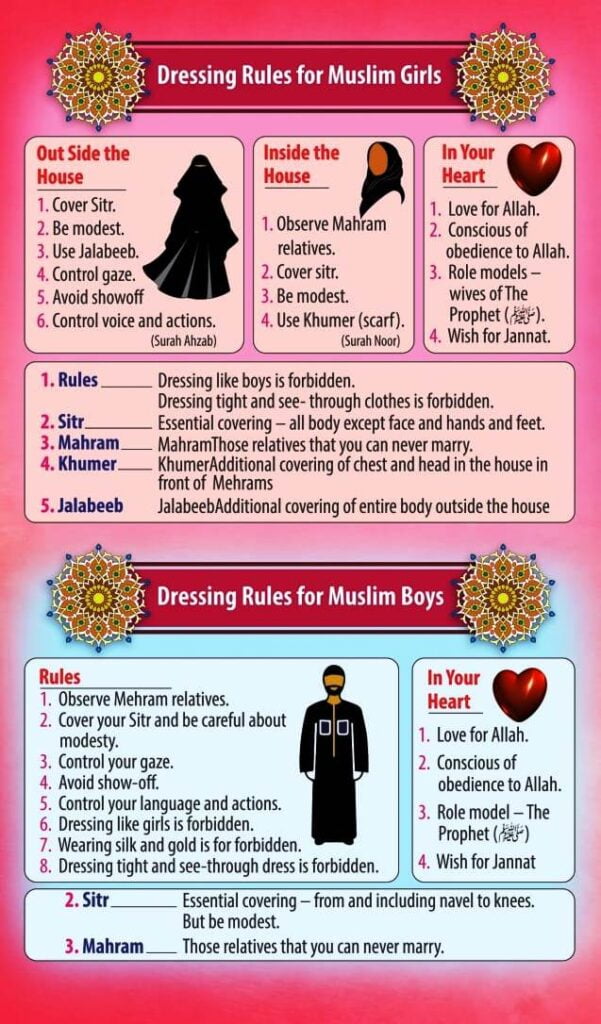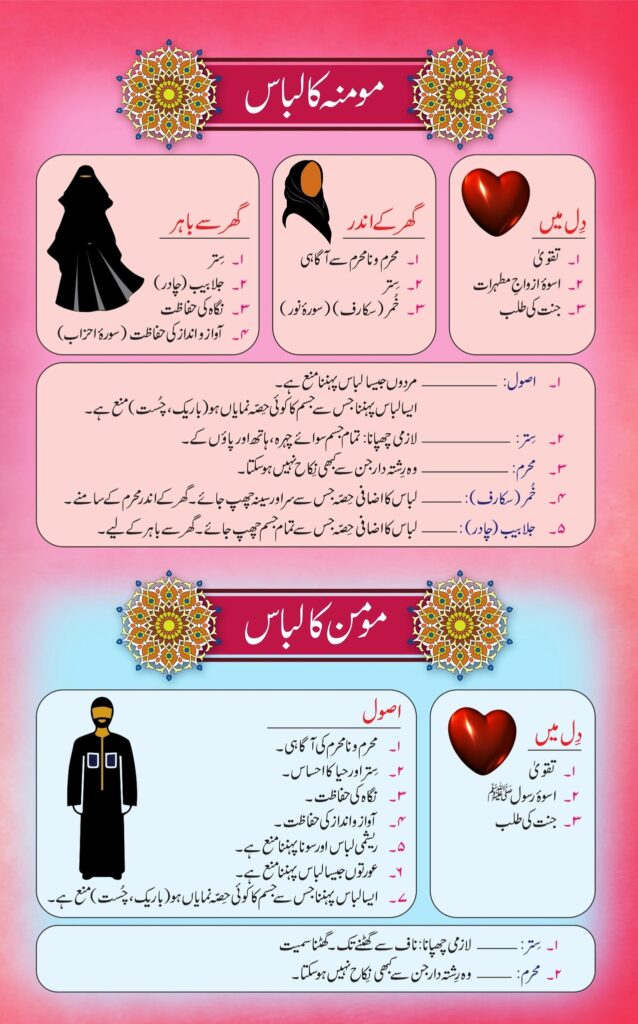
The Islamic dress code is grounded in the core principles of modesty, humility, and the preservation of personal dignity. It serves as an outward expression of an individual’s commitment to their faith and values, balancing spiritual devotion with respectful interaction in society.
- Foundation of Modesty: The primary objective is to cover the body in a manner that reflects Haya (modesty), ensuring that one’s appearance remains dignified and avoids undue attention or vanity.
- Emphasis on Humility: Islamic guidance encourages attire that is clean, presentable, and respectful, while explicitly discouraging arrogance, excess, or ostentation in clothing.
- Cultural Flexibility: Beyond the fundamental requirement to maintain modesty and cover the prescribed areas of the body, the tradition accommodates diverse cultural expressions, allowing for a wide variety of styles that reflect local customs while upholding religious principles.
- Reflecting Identity: Ultimately, the choice of dress is a personal reflection of one’s identity, signaling a commitment to a life of character and integrity that transcends fleeting fashion trends.